

CES 2026 Special Report | A Flurry of Innovative AI-Powered Smart Devices Emerges
Release Date:2026-01-08 13:33:19
Page views:80
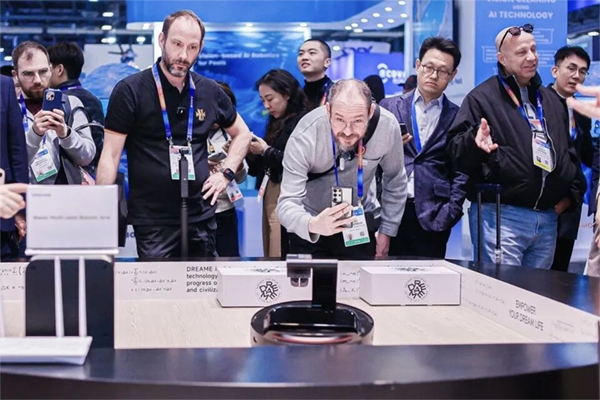
At CES 2026, China's smart cleaning robots captured significant attention.
A robotic vacuum cleaner climbs stairs using mechanical wheels, while its power source can also “walk” independently to recharge itself. This scene unfolded at CES 2026. At this year's CES, more end devices have evolved into intelligent agents capable of environmental awareness and autonomous decision-making. AI has been embedded into these end devices, enabling a closed-loop process of “perception-decision-execution.”

CyboPal ONE, the world's first “dynamic desktop display”
At CES 2026, an increasing number of AI-powered smart devices demonstrated proactive sensing capabilities. For instance, the world's first “dynamic desktop display”—CyboPal ONE—features a screen that interprets user posture and gestures. Powered by AI, its robotic arm adjusts the screen's viewing angle to align with the user's position, granting desktop displays unprecedented “autonomous perception” capabilities and pointing toward the next generation of desktop terminals. Zenithic Innovation's CilinX, the world's first consumer-grade desktop camera robot, empowers solo creators to effortlessly capture cinematic camera movements. Meanwhile, Ninebot's Segway scooter innovatively integrates the Xiro auto-rising seatpost with an AI perception system. This technology intelligently senses the rider's deceleration and stopping motions, enhancing riding stability and achieving “human-vehicle synergy.” Lenovo's new personal super-intelligent assistant, Lenovo Qira, delivers real-time responsiveness, cross-device execution, and contextual awareness. Through cross-device perception capabilities, it continuously builds personalized scenario recognition models, deeply understanding usage contexts, task continuity, and individual habits—growing smarter with every interaction.
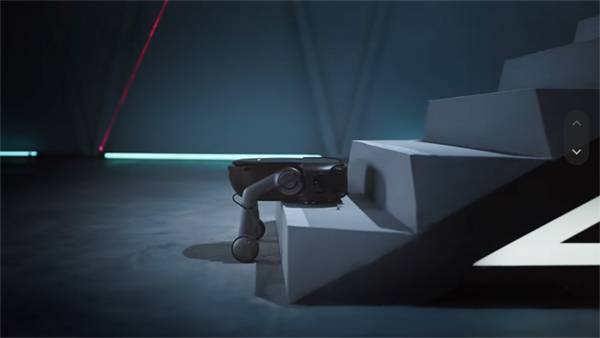
Stone Technology G-rover Robot Vacuum
The advanced feature of AI smart terminals lies in breaking traditional product boundaries to achieve functional integration. For instance, Roborock's X50 Ultra has implemented a “robotic arm” function capable of picking up small objects from the floor, while its “bionic mechanical foot” design enables the robot to overcome 2-centimeter-high thresholds. Roborock's G-rover vacuum robot features newly added mechanical wheel-feet, enabling it to overcome obstacles, climb stairs, and clean staircases and ramps—completely resolving cleaning challenges in multi-level homes. In the future, its evolving “form” may allow it to handle more household tasks and meet additional lifestyle needs. This represents not just an upgrade in cleaning tools, but a leap from flat-surface cleaning to comprehensive, three-dimensional whole-home service. Jackery's Solar Mars Bot is essentially a “mobile power source.” It integrates a retractable 300W solar panel, enabling autonomous movement and active sunlight tracking for self-charging—transforming charging from passive to proactive. Daotong Technology's smart charging robot features coordinated capabilities between cloud scheduling and station-side control. It automatically performs actions like plugging in, unplugging, and retrieving charging guns. By linking with fleet queue management systems, it significantly boosts charging efficiency, resolving numerous hassles for electric vehicle users during charging. Meanwhile, Morning Blues' VWS headphones integrate AI technology into lifestyle aesthetics. Each earpiece houses a dynamic display featuring original designs and supports user-uploaded personalized content. More than just headphones, they are a visible, perceptible work of musical art.
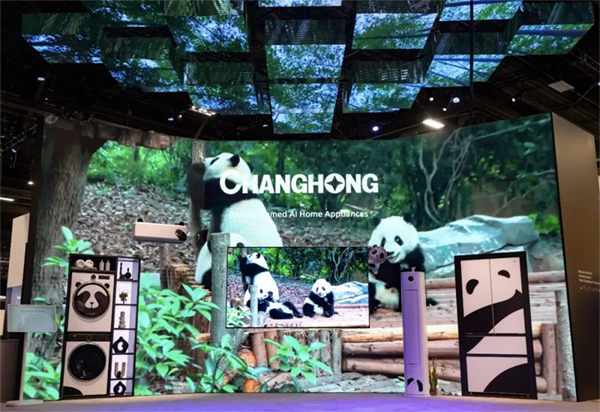
Changhong Full-Scene AI Home Appliances
The ultimate form of AI smart terminals is achieving “seamless integration.” For instance, the Sunflower X Smart AI Sleep Light exemplifies this concept by employing light sensors and millimeter-wave radar for unobtrusive sleep monitoring. It automatically adjusts lighting and sound, redefining the sleep environment through “spatial embodied intelligence.” Changhong showcased its comprehensive AI-driven seamless empowerment capabilities: its Panda-themed AI TV, enhanced by the anthropomorphic AI assistant “Panda Xiaobai,” delivers 24/7 whole-home intelligence; its AI refrigerator simulates the humid habitat of pandas to keep produce crisp for seven days; and its AI air conditioner integrates temperature and humidity data from the Wolong Nature Reserve to recreate the cool sensation of a bamboo-lined stream. These products deeply integrate AI's “tool” attributes with its “emotional” extensions, enabling AI to seamlessly handle various household tasks.
Whether it's the form factor breakthrough of the Roborock G-rover or the Solar Mars Bot's autonomous energy acquisition, both point to the same trend—AI is acquiring the complete capability to “perceive the environment, understand needs, and execute physically.” At CES 2026, the dawn of AI-powered smart terminals is visible, heightening anticipation for the day when these devices evolve from tools into companions. In the near future, they may cease to be cold gadgets in our hands and instead become extensions of human perception and transformation of the world.
Whether it's the form factor breakthrough of the Roborock G-rover or the Solar Mars Bot's autonomous energy acquisition, both point to the same trend—AI is acquiring the complete capability to “perceive the environment, understand needs, and execute physically.” At CES 2026, the dawn of AI-powered smart terminals is visible, heightening anticipation for the day when these devices evolve from tools into companions. In the near future, they may cease to be cold gadgets in our hands and instead become extensions of human perception and transformation of the world.
Editor: Zhao Qiang