

CES 2026 Special Report | The Sensory Symphony of AI and Display
Release Date:2026-01-13 13:32:29
Page views:76
CES 2026 delivers the answer. From smart livestock management systems to cycling-focused smart glasses, from AI pendants to next-generation intelligent vehicle cockpits, display innovators are composing a sensory symphony where display technology intertwines with cutting-edge AI advancements.
Displays become the sensory extension of AI-powered living.
At this year's CES, displays have evolved into communication windows connecting humans and AI. Numerous display companies are iterating on both the functionality and form factors of their screens, enabling the ever-refined AI core interface to permeate every aspect of daily life.
For professional cycling enthusiasts, BOE introduced the "AI+AR Smart Cycling Glasses," integrating AI large models with AR display technology. Equipped with a 0.12-inch ultra-compact Micro LED display and utilizing a diffractive waveguide solution, it achieves an eye-level brightness of 2000 nits. This delivers exceptionally clear, bright, and lifelike near-eye visuals. Paired with an AI interaction system, it enables three-dimensional coordination between rider, bicycle, and cloud services, precisely addressing three core cycling needs: safety, environmental adaptation, and emotional social interaction.
For mobile applications, TCL Huaxing's world-first Real Stripe RGB printed OLED phone display utilizes AI algorithms to optimize printing precision. This breakthrough achieves a resolution of 390 PPI, with a visual equivalent diamond arrangement reaching 490 PPI, delivering exceptionally refined visual effects.
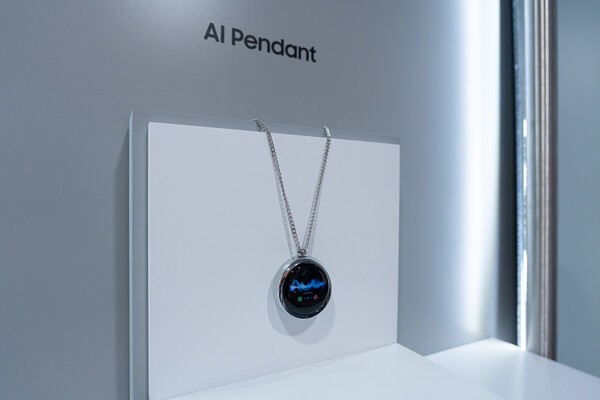
Samsung AI OLED Pendant
Samsung Display unveiled the AI OLED Pendant, an ultra-compact AI display in pendant form featuring a necklace-style design. Users can view AI notifications and core information directly before their eyes without needing to retrieve their smartphones. Samsung Display explained that the AI OLED Pendant is positioned as an “instant-view display” rather than a device for prolonged viewing. This characteristic is expected to pioneer new functionalities in future personal AI devices.
Samsung Display also showcased an AI OLED robot equipped with a 13.4-inch circular OLED screen at its facial position. This robot performs AI communication functions such as classroom guidance and information provision, with the OLED screen serving as the core interactive hub.
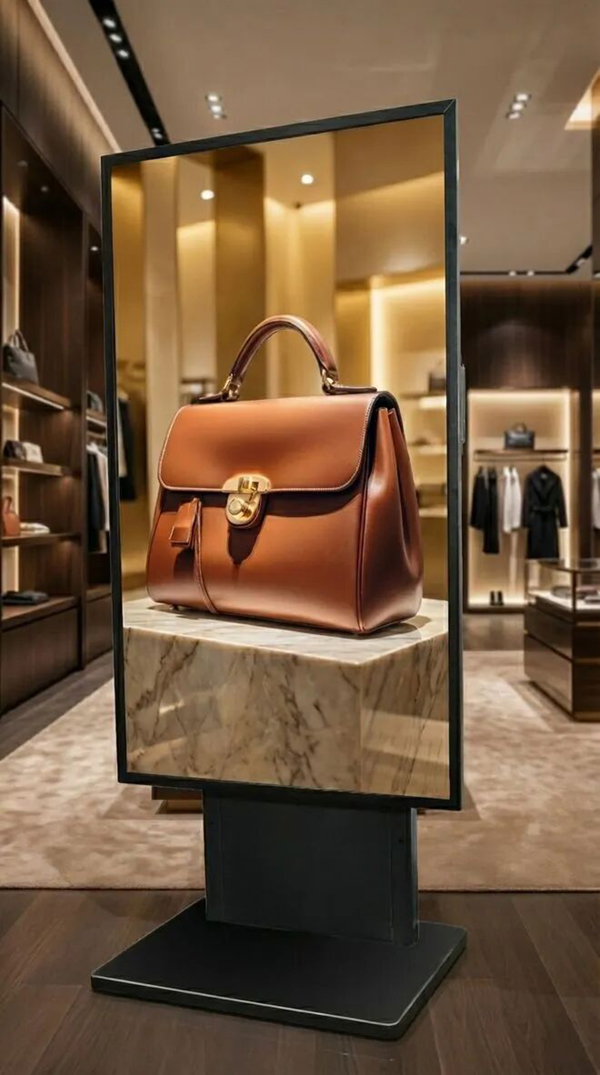
Innolux Multi-User N3D & Kirameki Display
Innolux introduces the “65-inch Multi-User N3D & Kirameki Display.” This 8K display integrates N3D multi-viewpoint glasses-free 3D technology with Kirameki algorithms, enabling simultaneous 3D viewing for multiple users while enhancing the rendering of object gloss and material textures. It primarily targets retail premium displays and digital advertising markets.
In the AI era, mastering the screen means mastering the world. While chips determine AI's intelligence, displays define its accessibility. As AI-powered screens accelerate their integration into daily life, these evolving displays are building bridges for human visual perception to connect with the digital world.
From information display to personalized driving companion
In-vehicle displays are evolving from mere “information panels” into “central hubs for human-vehicle interaction,” achieving breakthroughs across three dimensions: audiovisual experiences, interaction methods, and scenario applications. This transformation is elevating the cabin into a future mobile space that integrates functionality, aesthetics, and sustainability. At CES 2026, leading in-vehicle display solutions continue to redefine the driving experience to new heights.
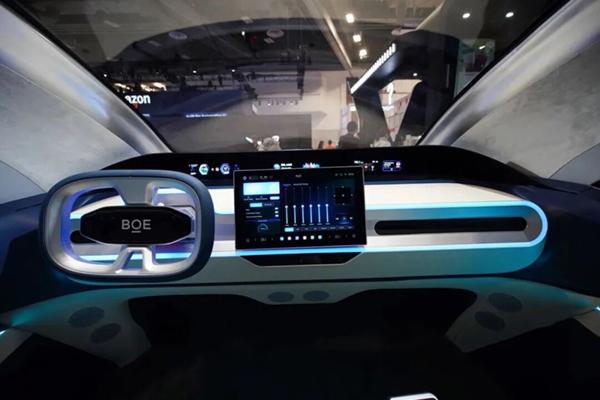
BOE “HERO 2.0 Smart Cockpit”
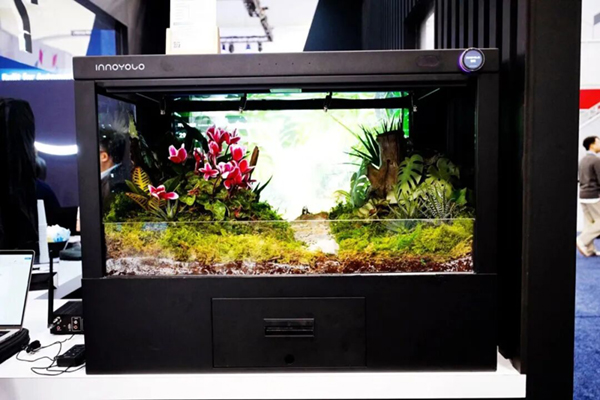
BOE unveiled the world's first “HERO 2.0 Smart Cockpit” at this year's CES, featuring the globally premiered Micro LED PHUD panoramic head-up display with an ultra-bright 50,000 nits. Utilizing AI technology, it enables intelligent voice and gesture control with a complex command recognition rate of up to 98%. The AI-powered “domain-controlled cockpit” enables passengers to order takeout, adjust air conditioning, and remotely monitor pet reptile tanks at home through the central control screen, achieving seamless “car-home connectivity” and “car-business connectivity.”
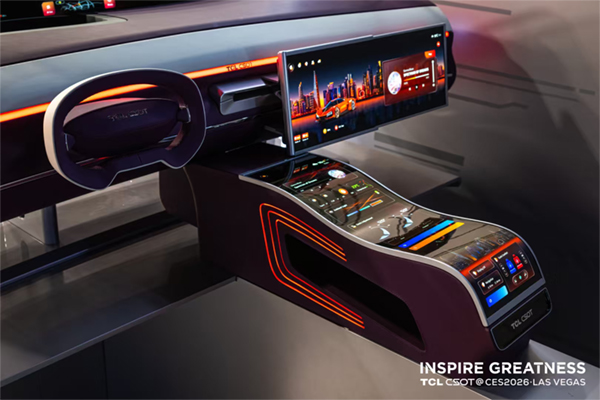
TCL Huaxing Unveils World's First Sliding-Rolling Center Console and Curved Armrest Printed OLED Automotive Display
In-vehicle displays are also pushing the envelope with innovative designs. TCL Huaxing's world-first rollable center console and curved armrest printed OLED automotive display seamlessly extends the center screen from the driver's seat to the passenger side, expanding from 16 inches to 28 inches without interruption for an immersive visual experience. Reportedly, its core sliding-and-rolling mechanism utilizes high-strength steel with a bending radius under 4mm, supporting over 100,000 rolling operations. Paired with a gradient-curved armrest box, it combines futuristic aesthetics with practical reliability, perfectly meeting the interactive demands of premium smart cockpits.
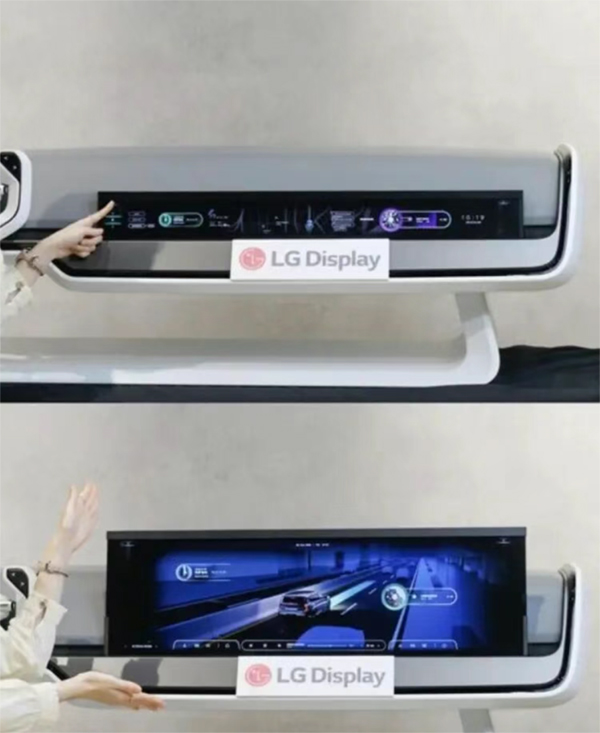
LG Display 33-inch Flexible Rollable OLED Automotive Panel
LG Display's 33-inch flexible rollable OLED automotive panel, inspired by the concept of “rollable screen phones,” utilizes P-OLED technology to enable specific panel sections to roll inward toward the front driver's seat with a curvature radius of approximately 3 centimeters.
Visionox and Corning jointly unveiled their “Flexible AMOLED Dual-Panel Dynamic Curved Automotive Display Solution” at CES 2026, marking its international debut. Two 14.2-inch flexible screens can flexibly switch configurations, balancing immersive visuals, convenient storage, and driving safety. Technologically, this product overcomes mid-size splicing limitations by reducing the bezel width to under 3.8mm—setting an industry-leading narrow record—and delivers a seamless, expansive viewing experience for users.
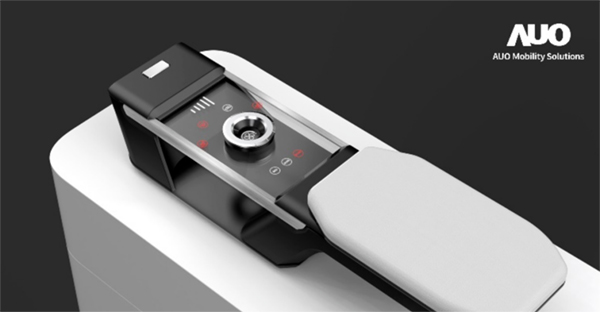
AU Optronics Cockpit Stealth Display Technology
AU Optronics focuses on cockpit invisible display technology, introducing its new INVISY display products that conceal display interfaces within the vehicle. The crystal-clear center console provides intuitive control with active haptic feedback and pressure sensing, dynamically presenting information only when needed. This creates a safer, more comfortable, and effortlessly personalized experience for the future cockpit.
When in-vehicle screens acquire “companion” attributes, the automotive cockpit truly transforms from a “driver's cabin” into a “third living space” beyond home and office. At CES 2026, this trend is accelerating.
Editor: Zhao Qiang